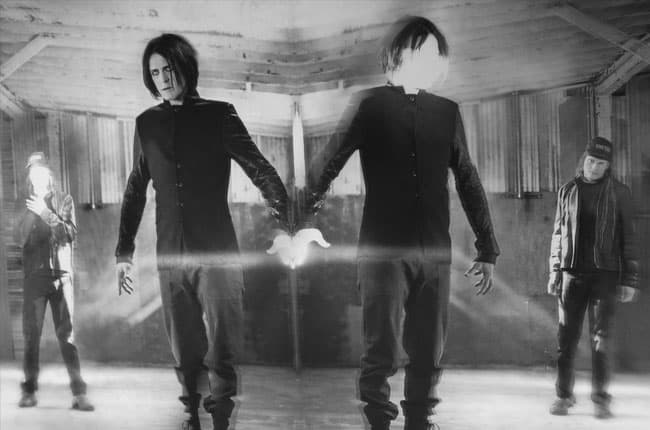
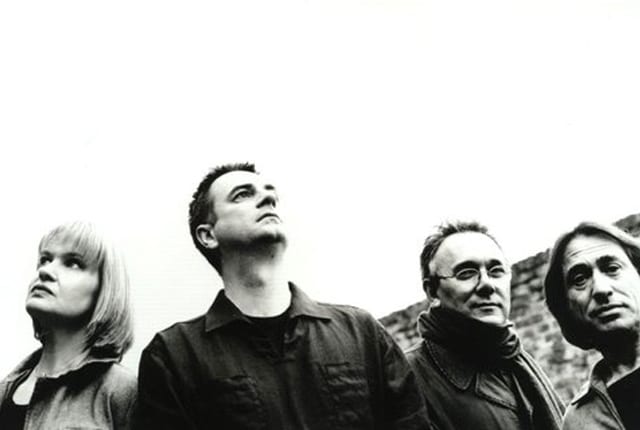
Last year, experimental musician and vocalist Penelope Trappes released A Requiem, a deeply personal album exploring themes of grief, mortality, and remembrance. For Opvs Novum: A Requiem Reworked, she invited artists including Julia Holter, Saint Etienne, Gazelle Twin, Midwife, and Stephen Mallinder to reimagine the album’s songs.
In this email interview, Trappes discusses the collaborative process behind the project, the importance of ritual in her work, how her relationship with creativity has evolved over the years, and bringing what she describes as a one-person “dark drone opera” to audiences on her current US tour.
What was the process of bringing in other artists to rework the material? To what degree did you seek people out specifically for this project, as opposed to continuing conversations about collaboration that already existed? Did you have particular songs in mind for particular artists, or were they given some freedom to choose?
The collection of reworks came from artists that I had met over the year of A Requiem being released. They were mostly my friends, who I approached about a rework, except for Julia Holter, which was something that magically came to me through the label. Nobody was told what to remix; they all picked a song with 100% creative freedom. It just naturally unfolded into a sort of collective of artists organically falling into place.
A Requiem felt intensely personal and inward-looking. What was it like hearing those songs filtered through other people’s interpretations, especially given the deeply emotional themes behind the original album?
It was beautiful to be able to share my personal funereal story with all of the other artists and to have them interpret and interject their own experience of how the music impacted them. It just blossomed outwards into this collective energy. It was a truly impactful and amazing experience hearing everyone’s work. I am so in awe of all of them!
Grief is often portrayed as a solitary experience, yet this project turns it into something communal. Did working with other artists change your own relationship to the material?
I agree that grief starts out as a personal experience, but with the state of the world it’s become more of a collective communal grief that we’re all processing. Each of the ten artists definitely reflected this with their personal interpretations, which has created something communal and bigger than any one person. The album is a microcosm of the universal grief in the world.
Much of your recent work has explored themes of ritual, mourning, and transformation. What continues to draw you back to those subjects, and have your feelings about them changed since making A Requiem?
It’s the rituals of life, whether it be a morning coffee or the lighting of a spell candle with an intention in mind, that set the day. These are very important to the creation of music and art. I think making A Requiem has only made me realize how important ritual really is and how it is becoming more and more important in these times. I’ll always be drawn to the shadows and ritualistic side of life, but probably not specifically grief.
Several of the reworks push the songs into very different emotional territory. Were there any versions that surprised you or revealed something about the original compositions that you hadn’t previously recognized?
The rework of “Red Dove” by Smote showed me the intensity of the message of “violent hope.” It comes straight in with such force and stays unrelenting, which has had a personal effect on how I perform the song live. Also, Julia Holter managed to turn “Thou Art Mortal” into a completely magical labyrinthine beauty, which surprised me in the sense that I knew the song was very emotional, but I didn’t realize it had that many more layers to it.
Your music often occupies a space between the sacred and the unsettling. Do you consciously think about those tensions while writing, or is that something listeners identify after the fact?
I feel like life is often unsettling, and I’m always in tune with the sacred to get me through. Non-religious, of course. Being in our bodies is not always easy. Finding solace within oneself, and channeling that through music, is an intentional decision to uncover the unconscious and sacred.
You’ve spoken about beginning your music career later than many artists. Has your perspective on creativity and ambition changed as you’ve continued to develop your work over the past decade?
The past 10 years have allowed me to feel comfortable and at peace with my creative energies. I denied it for so many years, as I second-guessed myself when I was younger. With age comes confidence. Now I comfortably lean into anything creative with complete freedom. As for ambition, I have learned to be grateful for what the universe gives.
You trained in opera and jazz before eventually finding your own voice as a songwriter. Looking back, are there elements of that training that continue to shape your work, even when the music itself sounds far removed from those traditions?
My training in opera is still very present with regard to the technical aspects of singing, but I also retained the high drama within my live show. I think the world in general feels a bit like an opera, so perhaps that’s why it is becoming a little more normalized. Jazz taught me to understand and respect, as a young person, different voices and different stories. The freedom to find your own voice amongst a gathering of other humans is important for everyone, whether it’s music or anything else.
After revisiting and reimagining A Requiem through other artists’ perspectives, do you feel ready to move on from that chapter, or has Opvs Novum opened up creative directions you want to explore further?
Opvs Novum is the definitive end of the chapter of A Requiem, and it’s definitely a marking point for the beginning of new sounds, new stories, and new frontiers.
What can audiences expect from the current tour in terms of the material you’ll be performing and the overall presentation of the live show?
The live show is a bit of a one-person dark “drone opera.” I perform most of the album in full, with a few new additions. Being on tour with Witch Club Satan is only heightening the witch energy. It’s massive, seismic. Bringing that communal coven energy to the USA has felt extremely necessary.
TOUR DATES
| With Witch Club Satan: 27 May – US, Philadelphia, PA – Underground Arts 30 May – CA, Montreal, QC – Fairmount Theatre 31 May – US, Cambridge, MA – Sonia 02 Jun – US, Baltimore, MD – Baltimore Soundstage 03 Jun – US, New York City, NY – Bowery Ballroom 05 Jun – US, Pittsburgh, PA – Preserving Underground 06 Jun – US, Detroit, MI – El Club |
| US Headline Dates: 07 Jun – US, Chicago, IL – Sleeping Village 08 Jun – US, Milwaukee, WI – Cactus Club 11 Jun – US, Seattle, WA – Vera Project 12 Jun – US, Portland, OR – Holocene 14 Jun – US, San Francisco, CA – 4 Star Theatre 15 Jun – US, Los Angeles, CA – 2220 Arts Order tickets to the upcoming shows here. |