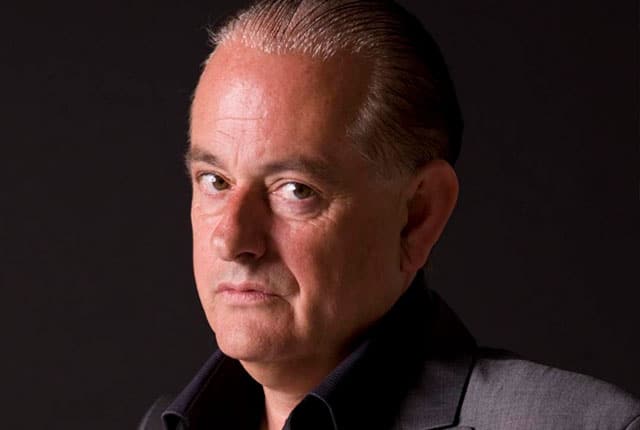
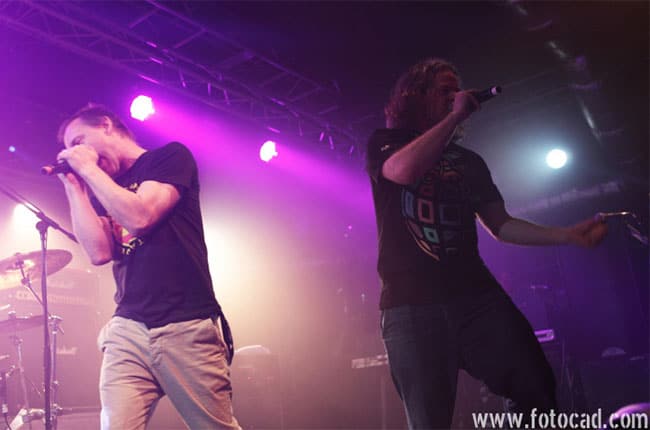
David J’s latest release, Tracks From the Attic Revisited, began with a return to a box of old cassette demos spanning several decades. Drawn from a selection of songs originally featured on the sprawling 2024 archival collection Tracks From the Attic, the new album finds David revisiting those recordings with a full band, reshaping and in some cases rewriting them into fully realized studio recordings that connect his past work with the present day.
Rather than treating the material as a nostalgia exercise, David found himself reconnecting with songs he sometimes barely remembered writing. Listening back to demos recorded decades earlier, he began hearing unfinished ideas, alternate directions, and lyrics that in some cases prompted revision or reinterpretation. The result is an album that transforms those earlier sketches into fully realized recordings while opening a dialogue between his past and present selves.
Tracks From the Attic Revisited will be released May 22 on Independent Project Records. In this Zoom interview, David J discusses rediscovering forgotten songs, revising lyrics for the present day, recording the album live in the studio with a close-knit group of musicians, and the process of reshaping decades-old material into something new.
When we spoke last time, you mentioned that this was the label’s suggestion, to go back and revisit some of these songs. What were your initial thoughts on the idea?
David J: I very much liked the idea because when I revisited the original cassettes, when we were compiling the compilation, the three-album compilation, I was naturally getting ideas hearing these, in a lot of cases, hearing these songs for the first time in decades. And I would get little musical ideas, “Oh, I could have done this. I could have done that.” Or I could see how this is like a seed of an idea that could evolve. It could have evolved into this other thing. And my mind was whirring in that way, so I was only too pleased to actually implement that kind of evolution.
Was it obvious what tracks you wanted to include? What factors went into your song choice?
David J: Yeah, it really was. It was just the ones that leapt out as having potential for being fully realized, and the ones that kind of grabbed my imagination really. Yeah.
Were there perhaps songs you didn’t include that may have inspired your other choices, or may have inspired ways you might have updated things?
David J: There were some that almost made the grade, but the ones that I cherry-picked and ultimately ended up on the album, I’m satisfied they were the right choices.
When you initially went back and listened to the material, did things take you by surprise? Were there perhaps things you didn’t remember doing?
David J: Oh yeah, that happened a lot as far as being surprised, and also to some degree rather mystified. Because I was a different person back then when I wrote these songs, especially back in the ’80s. Yeah, it was almost like this was an artist who’d come to me with the idea of me producing them. I do take on production jobs, and I’ll ask them to send me demos. And it was almost like hearing demos from strangers, as I was so divorced from the person who wrote those songs and the songs themselves. So yeah, that was kind of interesting.
Of the songs that spoke to you as wanting to be revisited, did you try to get a cross section? I’m just curious about what went into the final track listing.
David J: No, I just selected the ones that sort of appealed to me and then, once I had them all selected, I sort of took a long view, an overview, and saw how they could work as a flow, a cohesive flow. And just really like putting a live set together, or any sequence for any album, it’s really important. It’s very key. And I’ve always been very involved in that selection. And again, it always seems pretty obvious what the sequence should be and the order and how it flows. And also I was considering side A and side B as well with the vinyl. All of that played into the selection.
To what degree did you find yourself updating lyrics?
David J: Again, it would just be in the process of preparing for the re-recording. And I’d just look at these lyrics really a couple of days before going in, to see if they still sat right with me as I am now, and also in the context of the world in general. And again, it became very obvious which ones needed tweaking. And I mean, there are some references to people and situations that were very relevant at the time of writing, and those have changed.
I think of something like “New Year’s Day” where I referenced Patrick Walker, who was an astrologer back in the ’90s. He was in England. He had his column in the newspapers, and he was like the go-to guide for predictions of people’s immediate future. And I thought that’s not relevant because he’s not even alive anymore. “What does Patrick Walker say? Patrick Walker and his well-informed friends have run away,” which is a cynical comment on the state of the world.
So I thought, “Oh, well, who is the equivalent in these times?” And that is Lisa Stardust. So it’s, “What does Lisa Stardust say? Well, Lisa Stardust and her well-informed friends have run away.” So things like that, just sort of things that were pertinent to current times and events, little tweaks like that.
And I make quite a big one in “I Wish Those Spacemen Would Come” when I talk about … Originally, the verse was referencing Ronald Reagan, “a cowboy that’s been crowned a king for a day.” And I thought, “Well, I’m going to change that because it’s a glaring opportunity now for me to insert Trump, a reference to Trump.” So that’s why I put in about the oligarchs and the tech bros crowning a conman king for four years. So things like that came into play.
Could you talk a little bit about the recording process, how long you spent on it, the musicians you worked with?
David J: There were no rehearsals. I sent the original demos and my revised demo versions to them a couple of weeks before and just let them come up with their own parts. And then when we all got together, if I can set it up like this, I like to have the band playing all at the same time. So there’s that interaction and that kind of live edge, and that is what we did do.
And we really sort of worked it out. Any kind of little refinements were worked out on the spot, but they’re all such good players that I very much like how they interpreted the songs and what they brought to the expression of those songs.
And it’s like a regular group that I’ve played with for years and years: David Raven on the drums, Tony Green on the bass, and a couple of new additions. The newest addition was Jason Roberts from Spoon on guitar, very tasteful guitar player. And also John Bernstein on keys, who’s been accompanying me on live gigs of late. So it was a great little, tight little combo there.
And also I brought in a couple of other players just on odd tracks, like Stephen Perkins from Jane’s Addiction plays on one of the tracks and [Robert] “Smokey” Miles was the accordionist.
And I just happened to be around Dave Raven’s place. He has these wonderful get-togethers every now and again where he invites a bunch of musicians and it’s a big old, former rectory, this place in LA. Lovely place, big living room. And we all sit around in a circle and just jam along. And there was one guy there who had an accordion and I just spontaneously played “Knockin’ on Heaven’s Door” and he picked up on that and played a really nice part.
And then I wanted to record that. I’ve actually recorded that. I did it during the same sessions. That hasn’t been released yet, but we did a version of “Heaven’s Door” and invited him in. And then I found out chatting to him that he’d played with Bob Dylan and he was quite close friends with him and had known him for years. So that was very apropos.
And I also wanted an accordion on the song “Vincent in the Flames,” so he played on that.
There’s a core band there that play on everything.
Are there songs that you feel particularly took on a new life or a different direction once you did this new recording of it?
David J: Yeah, quite a few actually. One of my favorite tracks is the last track on the album, “Punishment By Roses,” and that’s a very different interpretation. And what you hear on the album is actually a run-through. It was intended to be a run-through before tracking.
By that time, it was actually the last thing we recorded. The band had loosened up and we just started playing it in a slower way and I really liked that. And I did the vocal live as a guide vocal there and then. And when we finished it, I thought, now, there’s a little bit of magic to that. So we played it back and I said, “Yeah, I don’t want to touch this. I don’t want to do it again.” The run-through is the track.
And it’s very different to the demo. Another one similar to that is “Leaning Towards the Falls,” and that’s a very different interpretation and different instrumentation to what I had originally had in mind for that track, but I very much like the way that went.
Yeah, so there’s two. “I’ll Put Off Thinking About You for Awhile,” that one really evolved into something that I love. To me, it’s got a kind of laid-back Rolling Stones kind of feel to it.
And there was another player on that, John Courage, who wasn’t actually in the studio. He’s based up in Northern California, but I thought he would be great to play lap steel on that. We sent the track to him and he laid it down immediately and sent it back and we mixed it.
The whole session was very quick. It was all done in about a week, like five days.
Do you see this material becoming part of your live set in the future? Do you plan on doing any shows focusing on it?
David J: I’m going to do a little run of dates just after the album comes out where I’ll be peppering the set with selections from the album. I’m not going to play the whole thing. I would’ve loved to have taken that band on tour with me and played more of the songs, but to be honest, it was just financially prohibitive.
Is there anything else you’d like to add?
David J: It’s been so great working with the label Independent Project Records. I love working with them and it’s a great relationship and a very artistic endeavor.
And I will mention the artwork that Bruce Licher’s come up with. Such a brilliant designer. And my idea for that, my concept for that, was that the image would be, again, me revisiting the whole thing in that it’s me sitting on a ladder. The whole idea was that I’m going up to the attic to retrieve the tapes. So we restaged that and Mila Reno was the photographer and she captured that image just right.
And then I sent the black-and-white shots to Bruce and he really went to town with the color scheme. He asked me if I envisaged any color scheme for the thing. And I did, it was just gold and little touches of green and blue. And he did a beautiful job on that, so I’m very pleased with it.

And then there’s some photos on the inside of the album that turned out great. And this again was Bruce. I was going in to record another track, not from the album, but a new album in the same studio. And the studio is run by Tony Green, who’s the bass player on the album. He’s the engineer and owner.
And Bruce said, “When you’re in the studio today, could you take some photographs of yourself because I want to do a layout for the centerfold and also the inserts.” And he said, “If you can make it kind of blurred, that would be great.” Or something a bit not obvious. And I personally love blurred photos.
I thought, okay, I got an idea for this. So I got some wax paper, like transparent wax paper, perforated it and then stuck it on my phone with some sellotape. And it has the effect of diffusing the image.
And I just gave the camera to Tony and I said, “Just take some photos of me playing in the studio in the main room with a microphone dangling down.” And they turned out so well. They’re all kind of misty and mysterious and just right for Bruce’s vision. So I’m very pleased with the whole package.
Tracks From the Attic Revisited is out on May 22, 2026 and can be purchased from davidjofficial.bandcamp.com.