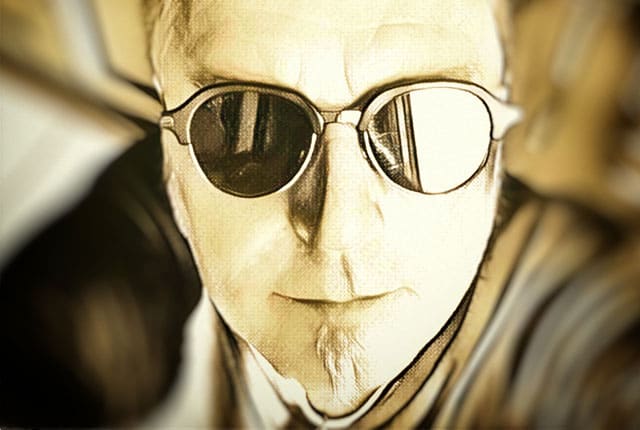
On their new album Generating Station Complex, The Cassandra Complex return to songs spanning four decades of the band’s history. Out now digitally, with CD and vinyl editions due October 30 via COP International, the album features newly recorded versions of tracks including “Moscow Idaho,” “The War Against Sleep,” “Nightfall” and “One Millionth Happy Customer.”
The project follows 2024’s Death & Sex, which similarly saw the band return to earlier material using the technology and recording experience now available to them. The immediate catalyst for Generating Station Complex, however, was the band’s 40th anniversary tour, a 49-show run across 13 countries that brought the songs to longtime fans as well as younger audiences encountering much of the material for the first time.
The tour also led frontman and founding member Rodney Orpheus to reconnect with the emotions behind songs written decades ago. Rather than simply recreating the original recordings, the band approached the new versions with few restrictions, combining the guitars, synthesizers and drum machines that have defined their sound from the beginning with modern recording technology. The process also left Orpheus surprised by how much they had gotten right the first time, despite originally recording with limited equipment and experience in a Leeds basement.
Chaos Control conducted an email interview with Orpheus about revisiting The Cassandra Complex’s past, the impact of four decades of technological change, and the new music the band is working on now.
Generating Station Complex consists of new recordings of songs from across The Cassandra Complex’s history. After doing something similar with Death & Sex, what made you want to take that idea further rather than make an album of entirely new material?
Rodney Orpheus: We really enjoyed doing Death & Sex, and it worked really well, so that was a “proof of concept” if you like. Then we did the 40th anniversary tour and we made all new backing tracks (drums and bass mainly) for that and the songs sounded great live, so it seemed obvious that since we already effectively had them half done we should add new keys, guitar, and vocals and go the whole way with it.
When Death & Sex came out, you said that modern technology allowed you to finally make those songs sound the way you’d originally imagined them. Did that experience influence the decision to revisit these songs for Generating Station Complex?
Rodney Orpheus: Very definitely. When we first recorded these songs it was in a basement in Leeds with whatever cheap second-hand equipment we could afford, and figuring out how to produce a record as we went along. Now we have much better equipment and a lot more experience in recording, so we wanted to see if we could marry that expertise with the original emotions that we were feeling when we first wrote those songs.
How did you decide which songs belonged on Generating Station Complex? Was it primarily based on the songs that have become most important in the live set, or were there songs you felt particularly deserved another attempt in the studio?
Rodney Orpheus: Mainly the first. We did 49 shows on the last tour, and the audience was made up of both old school fans and younger people who had never heard most of the songs before at all. It was the reaction of the audience that really inspired us to do new versions for them.
You’ve said that the response to the 40th-anniversary tour helped inspire this album. Did playing these songs night after night change the way you thought about them or how you wanted to record them?
Rodney Orpheus: I’m not sure if it changed how we thought about the songs – they are still the same songs, and I am still the same person who wrote the words. But singing them night after night meant I had to go back down inside myself to re-experience the feelings that I felt while writing them, and that was a very emotional and almost traumatic thing to do. So yeah, it changed me in that I was being forced back into my youth and the things I felt deeply then. But that was a very positive thing to do.
When you’re revisiting something like “Moscow Idaho” or “One Millionth Happy Customer,” how much attention do you pay to the original recording? Do you consciously reference it, or do you approach the song as though you’re recording it for the first time?
Rodney Orpheus: I think neither really. When we write and record we basically just let the song go where it wants to go. It’s more of an organic thing than a consciously thought out plan.
Was there a particular song on the album that changed the most once you started working on it again, or one that surprised you by turning out differently from what you expected? Conversely, were there elements of certain songs that you felt you couldn’t change without losing what made them work in the first place?
Rodney Orpheus: Well in some songs there are some unique sounds or parts that are sacrosanct, like the keyboard sound in One Millionth Happy Customer, or the huge choir in Nightfall. Those sounds are iconic and just have to be there or it’s not the same song. But apart from things like that, anything goes. On the other hand, when making the new record one thing that I was surprised by was how much we had gotten right the first time, despite our lack of technology and experience.
The Cassandra Complex were combining guitars, synthesizers and drum machines from the beginning, at a time when that approach was still relatively unusual. How do you think attitudes toward combining electronic and traditional rock instrumentation have changed since then?
Rodney Orpheus: From the beginning we just loved great rock and dance music and would use whatever sounded good. We never saw a problem with that, and still don’t. We love massive synthetic sounds, and banging drum machines, and nasty guitars, and we’ll keep doing that until the sun grows cold. I’m heartened by the way that many younger people today don’t give a damn about genre gatekeeping – as long as the song is good, who cares about the instrumentation?
Technology has always been central to The Cassandra Complex, and you’ve spent much of your life working with music technology outside the band as well. Does having almost unlimited technological capability now ever create the opposite problem from the limitations you faced in the ’80s?
Rodney Orpheus: Absolutely. The problem with having an infinite amount of choices is that you don’t have an infinite amount of time to make those choices! So you can easily end up with analysis paralysis. When producing I have learned to consciously limit myself and force myself to focus on exactly what we want to achieve, otherwise I’d spend 3 weeks equalising a snare drum!
The band’s music has accumulated labels over the years: post-punk, industrial, goth, electronic rock, EBM and others. Did any of those descriptions ever accurately reflect how you thought about The Cassandra Complex, or were they mostly labels that appeared after the fact?
Rodney Orpheus: When we started goth and EBM hadn’t even been invented, and industrial music was still bands like Throbbing Gristle or Cabaret Voltaire, not just heavy metal with distorted vocals like most people think of it today. And post-punk was bands like Magazine or Talking Heads. We loved all of those bands by the way! We called ourselves Cyberpunk, after the Science Fiction literary genre, because there was no musical label that could fit us. And we were listening to everything from the Velvet Underground to David Bowie to Suicide to DAF to Joy Division as well as dub reggae (Adrian Sherwood), early hip-hop (Arthur Baker), and modern classical music like Philip Glass. So mix all those together and you’ll get The Cassandra Complex.
Have you been working on new music? If so, has revisiting older material for Generating Station Complex had an effect on your approach?
Rodney Orpheus: Yes, and yes. I have about another 20 – 30 songs half finished on my hard drive, just worked on another one today in fact. So we’re just getting started really.
Generating Station Complex can be ordered from copinternational.bandcamp.com. For more info on The Cassandra Complex, visit thecassandracomplex.net