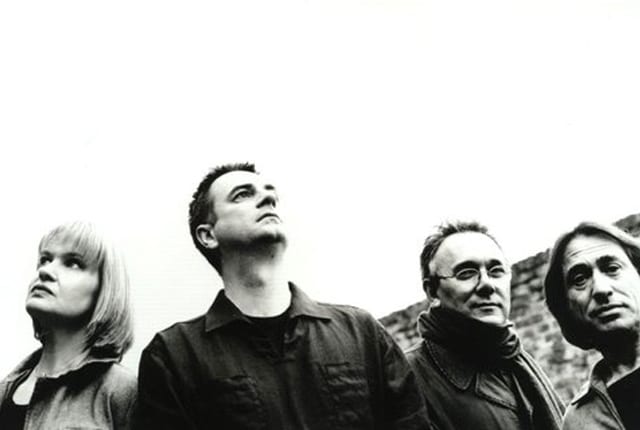
More than 30 years after it was first recorded, Anne Richmond Boston’s second solo album I Should Be Happy is finally being released. Best known as a longtime member of Atlanta’s The Swimming Pool Q’s, Boston originally recorded the album in the early 1990s as a follow-up to her 1990 solo debut. It was completed and then shelved when the label ran out of resources, leaving the tapes untouched for decades. It wasn’t until they were digitized years later that the project began to take shape again, eventually leading to its release on DB Records.
Rather than simply issuing the recordings as they were, Boston chose to revisit them with a fresh perspective. Working with producer David Barbe, she reshaped the material into a more stripped-down, vocal-focused album, reflecting both the passage of time and her own evolving sensibilities. The result feels less like a rediscovered artifact and more like a reimagined work.
In the following interview, Boston discusses how the album came together and how she reshaped the recordings.
First of all, the obvious question is how did this album come to be released now after so many years?
Anne Richmond Boston: Well, DB Records, who released it, also released my first solo record, which was in 1990, I think. And so this was supposed to be a follow-up to that. But after it got all recorded and mixed and everything, he just ran out of money and stopped putting records out on DB. It sat for 30 years.
What happened now to bring it out?
Anne Richmond Boston: So it was recorded in this studio that Rob Gal owned called Snack ’n’ Shack. He was my husband at the time and had recorded it all. When that studio closed, I think it was when the studio closed, he gave me all the tapes. So I’ve had them sitting in a closet for years and years. Then a friend of mine, Clay Harper, said, why don’t we just go ahead and get the songs, get the tapes digitized? So he paid to do that, which was really generous. That was probably about seven or eight years ago.
And I thought, well, I’m going to get Pro Tools and I’m going to learn how to do this myself and I’m going to remix it and do all this stuff. And of course that didn’t happen. I did get Pro Tools, but I was just like, “I don’t know what I’m doing.” So then Danny Beard, who is DB Records, approached me a few years ago and said, “Listen, I’d like to try to put that record out now.” After it was digitized and everything, I said okay, but I really wanted to remix it and kind of reimagine the whole thing. He agreed, so he paid to have me go into a studio here in Athens with David Barbe, who is fantastic. We sat for probably a solid week and just started from the bottom. I was very happy with most everything, but it had a lot of density to it. I thought if I’m going to put this out, I’d like it to be more of a vocal thing. So we did that.
How did it feel when you actually listened to these tapes? What was your impression after so many years?
Anne Richmond Boston: Well, I just thought it sounded like it could have been recorded yesterday. I didn’t feel like there was anything that different or dated about it. And I still liked most of the songs. But on the digitized tapes there were several songs that I didn’t even know were there. They were songs that were not on the original I Should Be Happy. So I thought, I want to switch those over and put those on the record and take a few off. It ended up making the whole thing feel more cohesive.
Was there ever any question about what to do with the recordings? Did you consider perhaps taking some of the material that wasn’t on the album originally and making it a separate release?
Anne Richmond Boston: Originally I just thought I wanted to put out the original I Should Be Happy. But when I found those other songs, I felt like they fit in well enough with what was already there, so I swapped some out. It was really strange because they were songs that I had written, and I’ve never really considered myself a songwriter. Most of the songs were written by Rob and there were a couple of covers on there. Actually both of the covers that are on the record were not on the original I Should Be Happy. They showed up on those tapes and I was just like, “Oh, okay.” But I always mainly wanted to get the record out because of the Terry Adams song with Terry playing piano and me singing. I just thought that song deserved to be out in the world.
What factors went into the choice of songs not to include?
Anne Richmond Boston: There was one Danny wanted to get rid of because he thought it was too political and didn’t think it was relevant, although it’s very relevant now. At the time we took that one out. Then there were just a couple of songs that I wasn’t that keen on. I decided I wanted to put on these four new songs, so I had to pick four to remove. There wasn’t really any major reason except for that one. That one was called “Cry Uncle,” and I took it off.
Is there anything from the work you’ve done over the past few decades, or other influences, that may have shaped the way this album ultimately came together?
Anne Richmond Boston: Definitely, because it’s been 30 years. I’ve aged 30 years and I felt like I wanted it to be less rocking and more vocal-oriented. Just a quieter, more emotional record, I guess, because I’ve lived a lot of life since it was first recorded. Rob and I got divorced and there were so many changes. He was a huge part of the original recording, and he still is since he recorded everything on there. He’s a great guitar player and there was tons of guitar on the original. It was really densely produced. If I were to start over I wouldn’t have done it that way, so that’s what I changed with this version. I added guitar to a couple of things with a different guitarist and took out a lot of the production on some of the songs. So I do think a quieter approach was what I was going for. I think it’s just because I’m older and that’s what appeals to me more now. Although I have to say the Hendrix cover [“The Wind Cries Mary”] I really love, partly because it was such a blast to do and I think it still holds up.
Were there any songs that were particularly challenging to reshape for this version of the album?
Anne Richmond Boston: Not really. I kind of had an idea when I went in with David and he is so great. He’s really even tempered and has a great ear. We were able to talk through things as we went along and just figure out the steps. I really appreciated all of his suggestions. I think the one that changed the most from the original was “Speedboat’s Wake.” The original version was really heavy, and we stripped a lot of that away. I was really happy with how that one turned out.
In general, with your solo material, how does it fit into your overall creative work?
Anne Richmond Boston: I think this is probably the most personal thing I’ve done. With the Swimming Pool Q’s I’m basically singing songs written by someone else. Half the time I’ve told Jeff Calder, who writes the songs, “What does this mean? Tell me what I’m singing so I can interpret it properly.” So that work is more about him. The first solo record was more Rob. I feel like this one is more me expressing my feelings and emotions. For me it’s a really personal record. It’s also a little scary. When we were working on it I was happy to be doing it, but then I thought, oh, this is going to go out in the world and I have no idea what people will think. Ultimately I’m really happy with it though. People have said it highlights me more than anything else I’ve done, which is kind of strange to hear, but it’s something I appreciate about it.
Do you perform this material live? Are you planning shows in support of the album?
Anne Richmond Boston: You just never know. I would love to, but I’m still putting a band together. I’ve been practicing for several months with a couple of guys from Athens and we’re working on getting it ready to play live. I don’t really know what will happen yet. We’ll probably do some local shows first. I’m hoping we can at least play in Atlanta and Athens since I live close to Athens and Atlanta is where the Q’s are from. If I could figure out a way to book more dates, I would love to play more shows and support the record. But it’s very early and I don’t have a manager or anyone handling all that for me.
I’m also curious about the relationship between your work in design and your music.
Anne Richmond Boston: Graphic design has been my main career since the ’80s, but I’ve always loved music packaging and things like that. I’ve done quite a bit of it. I was never able to support myself just as a musician, even when we were on A&M. Luckily I had a mentor in Atlanta. I didn’t go to school for design. I got a job working at an agency and after we worked together for a while he asked me to be his assistant. It was basically on the job training. That gave me a lot of confidence. When the Q’s got signed I asked him to design a record cover for us. He said, “Why don’t we all come up with something and see which one works?” So I designed that Q album cover and he looked at it and said, “That’s it. You should go with that.” Since he was someone I really admired, hearing that from him gave me a lot of confidence.
Having that background, how do you feel about music discovery and distribution shifting primarily online? In the past, a lot of people discovered bands through album covers in record stores.
Anne Richmond Boston: Well, who doesn’t love an album cover? I remember when cassettes came in and I thought, this is such a tiny format. I loved reading all the information on a full album cover. On the one hand it’s great that music is so accessible now, but I do miss the physical aspect of the full-size LP. That’s why we pressed one for this release, although I had to cut some songs because vinyl can’t hold as much. Still, I love having that full-size format. CDs were a little strange too, but at least you could include a lot of information in the booklet. I don’t really love the way things have evolved, but I don’t think it’s going to go backwards.
I Should Be Happy can be purchased from annerichmondboston.bandcamp.com.