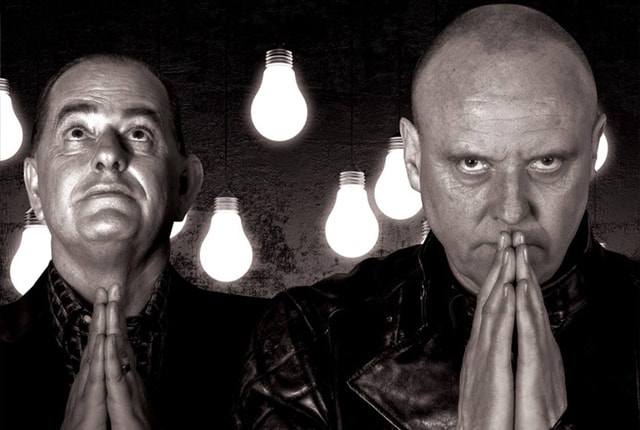
After a long hiatus, One Tribe Nation has returned to performing live and released a string of singles in advance of its forthcoming album, Estado Dorado. Led by founder, guitarist, and musical director Michael Sanders, the Los Angeles-based collective blends rock, funk, soul, jazz, and Afro-Latin rhythms. Its current lineup features Living Colour frontman Corey Glover on vocals, two-time Grammy-winning percussionist Christian Pepin, former Whitesnake bassist Uriah Duffy, keyboardist Dave Schulz, drummer David Cowan, and vocalist and multi-instrumentalist Ben Thomas.
The members bring experience from a wide range of musical backgrounds. Their collective credits include work with artists such as Santana, Prince, Nickelback, Flo Rida, Christina Aguilera, Sheila E., Kamasi Washington, Lalah Hathaway, Common, the Goo Goo Dolls, Berlin, the English Beat, and Zappa Plays Zappa.
In early 2026, the group performed a cover of Black Sabbath’s “The Wizard” at JAMM NIGHT, the annual benefit concert presented by the David Z Foundation and RCF. The foundation provides music education, scholarships, and other resources to aspiring young artists. Although One Tribe Nation had not initially planned to release the performance, the members reconsidered after seeing the footage. The resulting live single follows “Alpha God” and the band’s reinterpretation of Rare Earth’s “I Just Want to Celebrate.”
I spoke with Sanders and Glover about the band’s return, their creative partnership, the making of Estado Dorado, and why everything One Tribe Nation does ultimately comes back to performing live.
Before we talk about the upcoming album, I want to talk a bit about “The Wizard.” I know you recorded it for the JAMM NIGHT concert, and I’m curious: What made you pick that particular Black Sabbath song? Were you considering any others?
Michael Sanders: Our keyboard player had put us in touch with Paulie Z, who runs the David Z Foundation. He and RCF were putting on this show, and the theme was people who had passed. So I thought it was an opportunity to do a Black Sabbath song because I could really picture Corey singing “The Wizard,” and it totally worked out.
The inspiration was that I’m a lifelong Black Sabbath fan, and that was the first Black Sabbath song I ever heard. We just thought it would be a really, really cool tune to cover—one that we could make into our own thing. We’re usually not that heavy, but we felt like we could give it a One Tribe Nation kind of vibe and add some percussion to it. And yeah, it was really just the perfect song for our style and for the format of the show.
Was it an obvious choice to release as one of the first singles people would hear from this incarnation of the band?
Michael Sanders: Not necessarily.
Corey Glover: No, I was just thinking it’d be better to hear me do that than “Cult of Personality.” How about that?
Michael Sanders: Fair enough.
I’m also wondering whether it’s representative of the music you’ve been working on for the album, in terms of style.
Michael Sanders: No. There’s another song out there called “Alpha God” that’s pretty representative of what it is. We’ve got a full record of songs in that sort of vein, where it’s really like a funk-rock, Afrobeat kind of mixture with a lot of percussion.
So when we played “The Wizard” at our show last month, we added more percussion and keyboards and made it a little more One Tribe Nation. We multitracked that, too. I don’t know—maybe it’ll end up online at some point. But yeah, it’s heavier than we normally are. I think we all come from a heavy background, though—at least Corey and I do, and so does Uriah, the bass player.
Our keyboard player, Dave Schulz, is like a Jan Hammer to my Jeff Beck kind of situation. He plays in a lot of bands right now, like Wang Chung, Berlin, and The Sweet, but he’s also played with the Goo Goo Dolls and the English Beat—just every type of thing. He’s not necessarily a heavy metal guy, but he can kind of do anything.
Corey Glover: He’s a Swiss Army knife for the band.
Michael Sanders: He’s a Swiss Army knife, yeah. And he was the first real member to join after I moved to the United States. We’ve been together for 20-something years.
Could you talk about the history of the band? I know there was a gap between albums, so what made you come back to One Tribe Nation now? And how did the two of you end up collaborating?
Michael Sanders: Yeah, so I guess, to go all the way back to the early 2000s, Dave Schulz, the keyboard player, was the first member. Then we brought in our drummer and producer, Josh Eagan. Those guys really helped me create this sound.
We did one record around 2005, and then we did another one in 2014 with a slightly different lineup. We also had our original bass player, Dave Filice, who was another founding member of the group. Then, around 2014, I had a kid, and the band was kind of winding down. We didn’t know we were going to stop, but I ended up taking almost 10 years off. I was playing around with it, putting the lineup together, and doing a little bit of recording in the early 2020s and during the pandemic.
Once we had put together some material, I asked a mutual friend of Corey’s and mine—his stylist and one of my oldest friends in Los Angeles, Lisa Balfour—whether she thought Corey would be interested in singing on the record. He heard it, he liked it, and we’ve been friends ever since.
Corey, could you talk about your initial impression? What drew you to become involved with this?
Corey Glover: Well, when Mike told me who was in the band, I was like, “I know half of these guys, and I know they don’t do shoddy work.” So, first and foremost, it seemed like this would be something good to be a part of. Lisa also told me all about what was going on, and it felt good. It was a bunch of these guys—a lot of them from New York’s Latin scene—whom I had known for a while from growing up in New York. It just sounded like something I would click with.
The more Mike brought me in for stuff, the more I dug it. “Celebrate” was an amazing session. The whole band was there, and we were just grooving on that. It was a lot of fun. It just clicked, and I was happy to do it.
Do you see this mainly as a live project or a studio-focused one? What is the balance?
Michael Sanders: This is all for the live show. Everything we do is so we can play live. Everything we’ve done up to this point is meant to get us to a situation where we can go out and play live.
Corey Glover: I agree.

Given that, how does it affect your approach in the studio?
Corey Glover: We record this stuff in a way that’s conducive to hearing it live. How we play it is how you’re going to hear it. You just have to picture yourself in one of those dank little clubs where you go to get your beer, hear this band playing, and have a good time. And get drunk. Drunk is good when you’re listening to this stuff.
Michael Sanders: From a production standpoint—to build on what Corey said—everybody plays the way they play live. As a guitar player, I like my solos. I write them, and I usually play them note for note live. I’m not afraid to improvise when I need to, but I kind of like the idea of reproducing the record really accurately. I know it bothers me sometimes when people do something completely different and it doesn’t land.
So I’m thinking about that. And because I’m mixing everything, I’m also thinking, “Is this something that’s going to translate live?” Some of that is yet to be determined. You figure it out on the fly, but there aren’t a lot of extra overdubs that you’re not going to hear in the live show.
How do you balance your time, given that Corey works with Living Colour and other members are involved in different projects?
Corey Glover: You don’t. You wait and see what happens. If something comes up for One Tribe and it doesn’t interfere with your schedule, you go. If it’s the other way around, you go with that. I don’t have any compunction to favor one over the other. They’re both viable and worthy of my time, so I have to make sure that one doesn’t interfere with the other.
You’ve also put out another cover, “I Just Want to Celebrate.” Could you talk about what made you choose that song?
Michael Sanders: You know what? I just thought it was a cover that really fit with our instrumentation. If you really listen to my first record—and even the second record, which is a little more rock-oriented and was produced by Chris Baseford, a really well-known rock producer and one of my good friends—the style is early ’70s.
So we’re really into that early-’70s sound, where there’s a B3, percussion, and a guitar—but not a super-high-gain guitar. It’s more of a straight-into-an-amp kind of guitar, with really soulful singing. I felt like the song fit our motif really well, and I’ve always loved it.
I also thought it was a positive song at a time that really wasn’t super positive. I would say it was kind of like when Nile Rodgers wrote “Good Times.” If you hear him talk about that, he’ll say, “They weren’t the good times.” New York was a mess, man, and it was dark. But it was a way of saying, “You know what? It’s still great to be alive. It’s still great to go out and have fun. Don’t forget about that. Don’t get dragged down by all the negativity, and try to reserve some space for all the beauty in life.”
How much of the upcoming album spans the years between records, and how much was written more recently?
Michael Sanders: All of the songs were probably written within the last few years—around the pandemic, I guess. I had a structure for some of them before that. I’d just been chipping away at this between my fatherly duties and all the other things I do to survive in this crazy world.
I was able to chip away at it: put a loop down, come in with bass, and play the bass. Then I’d call up Dave to do the keyboards. I might come in and do the drums after that. By the end, I have all the players performing the music, and anything electronic gets replaced. I replace my bass with a real bass player, et cetera, et cetera.
Once I have all that together, I can call Corey in. I want to give him a canvas that he can work with. Sometimes I have a habit of imagining exactly what it’s going to sound like, but I can’t expect other people to do that. So I have to present people with a—
Corey Glover: I don’t.
Michael Sanders: I have a very clear view of what it’s going to sound like. So far, it has ended up being relatively accurate, and then other people add things that make it better than I could have imagined. That’s been the experience so far.
But yeah, as far as the span between the two records, there aren’t any leftovers from what we did before. There are two songs on there that I wrote years and years ago with sax player Jason Hemmens, and “Alpha God” is one of those. There’s another one coming up, too. Other than that, they’re all relatively new songs.
When other members began adding their input, did the music evolve in any notable ways from what you had originally imagined?
Michael Sanders: Yeah, so I come from progressive heavy metal. I was in a band in the early ’90s that had a record out in Europe, the United States, and Canada, but it was very much like Megadeth-type stuff. Every single note had its place. There was no winging it, no improvising—everything was really, really tight. Even though there are some things about heavy metal that are limiting, you can’t underestimate how tight it has to be in that setting.
So I was a micromanager as a bandleader. I would come in and manage everybody’s stuff. Then, with this type of music, I made a decision to switch gears. I was a big Al Di Meola fan and a big Santana fan, and I really wanted to start playing something like that. I really just felt it.
As I got to play with these guys—who were, in my view, way more experienced musicians than me and much more knowledgeable about theory—I realized at some point, after some gentle nudging and just listening to—
Corey Glover: It wasn’t gentle. It wasn’t gentle. I just want to let you know it wasn’t gentle.
Michael Sanders: It wasn’t gentle. But basically, I realized I’m going to be better off if I just let these guys interpret what I’m doing instead of going, “Oh, no, no—I want this, I want this, I want this.”
And you know what? That just ended up becoming the way everything works now. If you find people who you think get you, there are very few notes you have to give. Now, I just let people interpret it.
Even when we have a sub come in, I’ll say, “Look, learn it like the record. Then, if you want to expand on that afterward, that’s fine. Learn it like the record so we don’t have to rehearse for an extra two hours or something like that. Then, if you want to expand on it, that’s fine.”
Really, the whole concept is everybody adding their two cents to this vision.
Corey, could you talk a bit about your process for coming up with lyrics and vocals within this type of working relationship?
Corey Glover: It’s usually in the moment—what I’m dealing with that day, what I’ve seen skulking around the internet, what my girlfriend said to me that morning. It could be anything. But usually, I try to make it as topical and personal to me as I possibly can so that I can sing it that way.
I can’t sing something I don’t believe in. It’s never going to come off the way you want it to. So I try to find something I truly believe in and give it as much of myself as I possibly can in that moment.
Were there any instances when you drew on lyrical ideas from the past that you perhaps hadn’t previously found an outlet for?
Corey Glover: No, the idea is to make it work. In a way, it’s almost like an acting exercise, where you’re trying to find the truth of any given situation—the truth of any musical situation—as you would with any kind of scene work you do.
You’re trying to look at something from the top down. You look at it from above, then you look inside it, and then you look below it. If you find yourself in those places, can you look down on something and understand it? Can you understand it from the inside? Can you understand it from the left or the right? It’s all part of the process.
Is there anything else you’d like to add?
Corey Glover: I like money, and I’d like to have some, please. Thank you.
Michael Sanders: What’s exciting is that, in this time of no gatekeepers, you can do a six- or seven-minute song with a lot of parts in it. It still may not register as a “hit,” but I think the potential for experimentation now is greater than at any time I can remember. The number of people you’re competing with is also greater, so it’s kind of a catch-22 situation.
At the same time, I think people are more open-minded and less confined to their own little cliques than they were a few years ago. I say that just from watching my 12-year-old daughter. They don’t care when music came out. There’s no being late to the party. They’re listening to Kate Bush, and then they’re listening to some really obscure Japanese artist they found through an anime show. They don’t know release dates. They don’t know genres. They don’t know anything.
So, in a way, it’s a good time for us because no one has ever been able to put me, the stuff I write, or us in a box. And sometimes they want that box, as you know.
When you play live, to what degree do you draw from the first two albums? Do you perform any additional covers?
Corey Glover: Yeah. Yeah. It really depends. If I remember the song, we’re golden. But if I have to read it, I’ll give it my best shot.
Michael Sanders: We did a Curtis Mayfield cover. We had a horn section and a nine-piece band at the last gig, so that was really fun. That went straight to my heart. And what else? We did a Living Colour song. We did two of Corey’s songs, which were a blast. And we did “Celebrate” and “The Wizard.” Those were the covers we did at our last show.
Then we did some stuff from the second record, one song from the first record, and two from the new record—including one you haven’t heard yet.
Getting back to the idea that there’s more freedom and there are fewer gatekeepers, but at the same time there’s so much material out there: When you play live, you do have to describe yourself to some degree—not put yourself in a box, but somehow let people know what to expect. Do you find that challenging? How do you describe the band to others?
Michael Sanders: I usually describe us as an Afro-Latino funk-rock band. Some people go, “Cool,” and some people go, “What the hell does that mean?” But it’s so eclectic. That’s one way I’ve figured out how to define it. Whether there’ll be a better way to define it in the future remains to be seen.
Yeah, it’s interesting because I feel like that fits, but there’s always a danger of confusing people, or of potential listeners not realizing that they might like you.
Corey Glover: Well, that’s what you’re looking for: somebody to go, “I don’t know what this is, but hell, I like it.”
Michael Sanders: Yeah. I mean, if you can make it that way, I think you get more loyal fans. Part of me thinks that’s why Living Colour is still around.
Corey Glover: I was just about to say that. Yeah, yeah. That was exactly the appeal of Living Colour. It’s like, okay, you have this avant-garde sort of harmelodic jazz guitar player, this fusion drummer, this real funk bass player, and this crazy man in front of them. I don’t get it. I don’t have to get it, but I like the groove. Let’s go.
Michael Sanders: Yeah. Yeah. That’s what we’re banking on.
And even though you said “The Wizard” doesn’t necessarily represent the album, it does grab people’s attention.
Michael Sanders: We had no intention of releasing it at all. Well, that’s not entirely true. We shot it just in case something happened.
That was the thing. It was like, look, we’re all here. We didn’t rehearse, and it was a little bit of a pressure situation for me. But yeah, we had our guy Will Cook, who does all our videos, show up and shoot everything just in case. We grabbed all the multitracks, too. After we saw the footage, we realized we had to do something with it. Then it was just a matter of putting together the audio.
I think it came out pretty good. It’s hard for me to say because I’m so close to it. I’ve been involved with every single note, editing and mixing that song. But it did get us some attention. Our friend Lisa was actually with Sharon Osbourne the other day, and she said Sharon had heard it and liked it, so that was kind of cool.
But if somebody was expecting a whole record of that, they might be disappointed. Still, I feel like anybody who looks at us and hears a couple of notes realizes it’s not going to be formulaic. You’re kind of in for a penny, in for a pound.
For more info, visit onetribenation.com.